


Discover how virtual and augmented reality increase real estate sales, reduce doubts, and accelerate decisions during the off-plan phase.
The real estate market didn't change overnight. But the behavior of buyers has changed, and that, in itself, completely alters how developments need to be presented. Today, the client arrives more informed, more discerning, and, above all, less inclined to interpret what they are seeing. They no longer want to rely on their own imagination to understand a project. They want clarity.
And this is the most sensitive point in off-plan sales. For decades, the sector has relied on floor plans, physical models, and decorated apartments to help clients visualize the property. These are undoubtedly important tools, but they carry a structural limitation: they all require interpretive effort. In the end, the client needs to assemble the property in their own head. And the truth is that most people can't do that accurately.
That's exactly where many sales stall, and, most of the time, this goes unnoticed.There's a common interpretation that when the client doesn't move forward, there was a lack of interest. But, in practice, what happens most often is something else: there was a lack of understanding. Questions like “Will my sofa fit?”, “Is this view really like this?” or “Is the space really this big?” are not objections in the classic sense. They are clear signs of uncertainty. And no relevant decision happens when perception is still incomplete. It is in this scenario that virtual reality in the real estate market and augmented reality for properties are beginning to gain prominence. Not because they are technological or innovative in themselves, but because they solve exactly this problem: the lack of clarity at the time of decision.

The difference is profound.
With virtual reality (VR), the client can walk through the units in real scale, observe the view from the chosen floor, understand the circulation between environments, test finishes and even compare different floor plans within the same experience. With the project, it can be projected in the physical environment, allowing the client to visualize the space concretely, in its own context.
The difference is profound.
Before, the customer had to imagine it. Now, they recognize it.
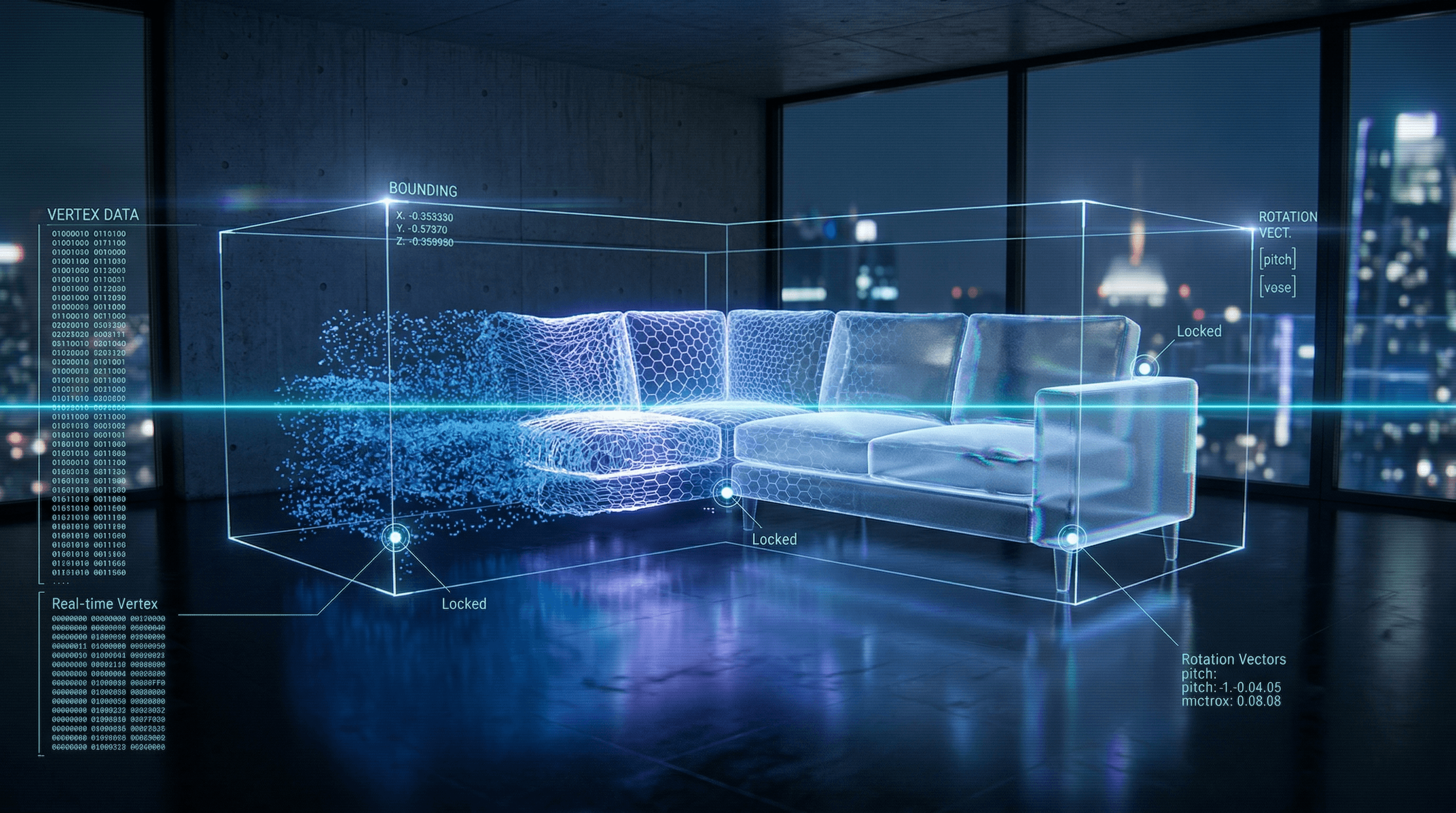
This expands reach and reduces costs at the same time.
And when he recognizes it, something immediately changes in how he positions himself regarding the purchase. The conversation stops being about understanding and becomes about deciding. In practice, this has a direct impact on commercial performance. The use of VR for developers and AR in the real estate market increases the conversion rate, reduces objections, shortens the sales cycle, and significantly improves the quality of interactions. The broker stops spending energy explaining the basics and starts acting as a facilitator of choice, which makes the whole process more efficient and more strategic. And this point is important: it's not about "modernizing" the presentation. It's about reducing uncertainty.
Another relevant aspect is the comparison with the traditional model. The physical model apartment, for example, still has its value, but it is limited. It shows a single unit, a single layout, a single possibility. Everything else continues to depend on the client's ability to interpret.With virtual reality, this limitation disappears. It is possible to present all the floor plans of the development, different sizes, layout variations, multiple finishes, as well as the common areas and the surroundings. Everything within a single experience, with real scale, consistent lighting, and complete context. In addition to the improved experience, there is also a clear operational advantage. A physical showroom can cost hundreds of thousands of reais, take months to build, and still require constant maintenance. Immersive technology, on the other hand, concentrates everything in a single digital environment, with faster implementation, greater flexibility, and the possibility of use at different touchpoints, from sales stands to external presentations and even remote interactions.
This expands reach and reduces costs at the same time.
But perhaps the most relevant point is the impact on trust.
In the real estate market, trust is not a detail, it's the foundation of the decision. And, in off-plan sales, the main obstacle has always been uncertainty. When the client needs to imagine too much, they tend to postpone. When they lack clarity, they hesitate. And this hesitation often doesn't become an explicit objection. It simply interrupts the progress of the sale.