


Introduction
There's a moment in the home buying journey that no one openly talks about, but every real estate agent knows well: when the buyer looks at the floor plan, falls silent, and says, "I'll think about it."
It's not a lack of interest. It's a lack of experience.
They can't imagine it. They don't know if the space is sufficient, if the light enters well, if the circulation makes sense for their routine. And when the doubt isn't resolved during the presentation, it turns into giving up later.
Immersive Reality exists to close this gap, and today, developers who have already understood this are selling faster, with fewer objections, and buyers who are much more confident in their decision.
But there isn't just one technology. There are several, each with a different role in the journey. And choosing the right one for each moment is what separates an experience that impresses from one that converts.
1. Virtual Reality (VR): When the property begins to exist before construction
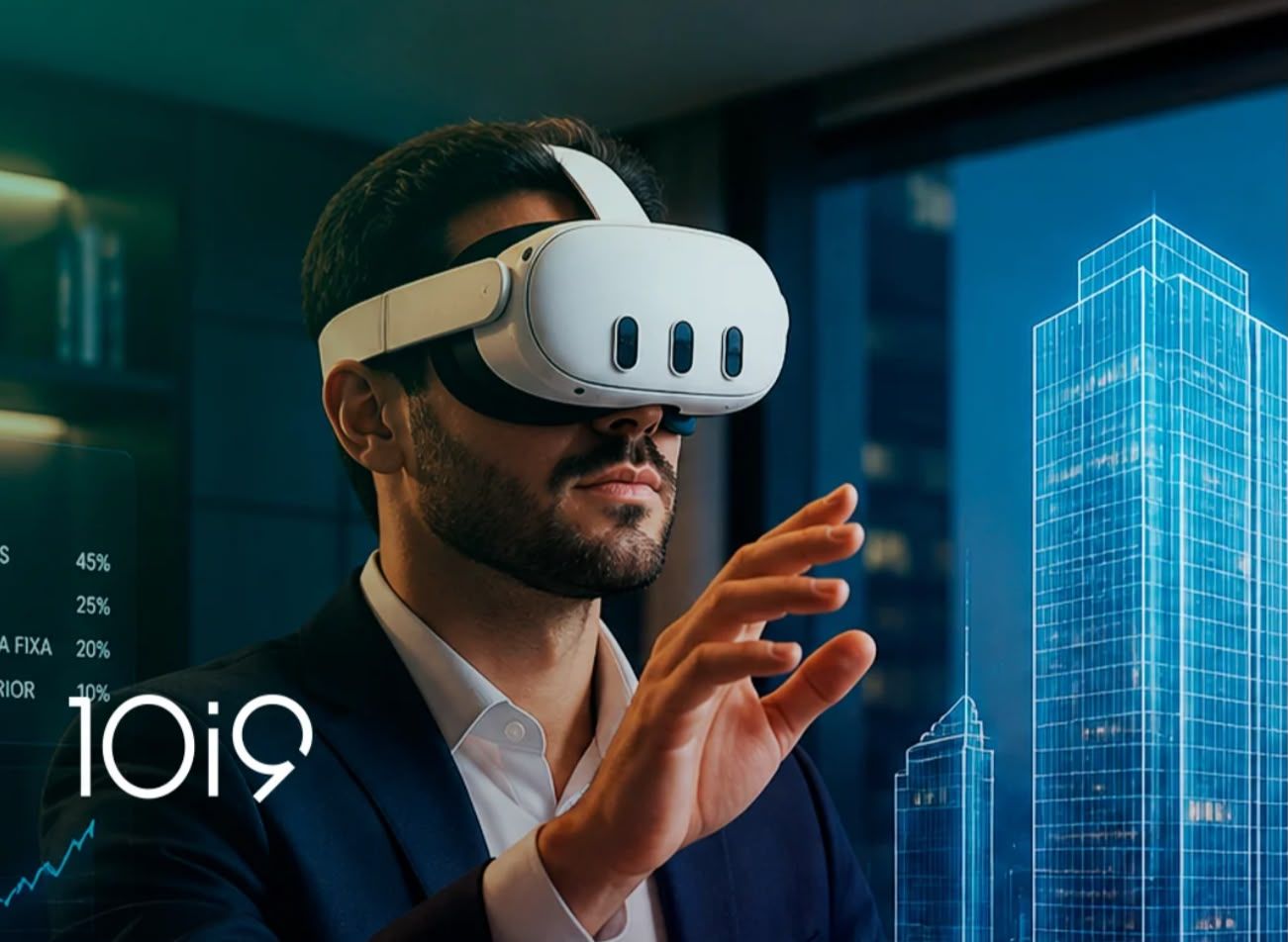
Virtual Reality is the most complete immersive technology available today for the real estate market. With VR glasses, the buyer enters the apartment, not a representation of it, not an animation. They enter, walk around, open doors, choose finishes, and see the real view from the 15th floor while the afternoon sun streams through the living room window.
All this before a single wall is erected.
The questions that hinder decisions disappear: "Is this space sufficient?" they feel the proportion with their own body. "Does the light enter well here?" they see in real time. "What is the real view from my floor?" they are up there now.
VR doesn't convince with arguments. It convinces with experience. And experience generates certainty. Certainty closes deals.
Where it works best: sales stands, fairs, events, pitches to investors, digital launches, and remote customer service.
2. Augmented Reality (AR): The property comes to where the client is
If VR takes the buyer inside the property, AR works in reverse; it brings the property to where the buyer is.
Using a cell phone or tablet, they point to an empty lot or any physical space and see the project designed there, in real scale, with textures, materials, and lighting. It's possible to virtually move around an apartment still in the planning stage, compare typologies, show the before and after of the construction, all without leaving the place.
It's lightweight, accessible, and doesn't require special equipment. For external sales teams, it's one of the most powerful tools available today.
Where it works best: site visits, presentations outside the sales office, door-to-door sales, finishing displays, and mobile device experiences.
3. 360° Tours and WebXR: Immersive experience that fits on your phone and reaches anywhere
Not every immersive experience needs glasses. 360° Tours and WebXR are the bridge between digital and immersive, and they work directly in the browser, without installing anything.
The 360° Tour creates navigable fixed points throughout the property, with interactive hotspots that highlight information, finishes, and project differentiators. WebXR goes even further: it allows for completely interactive environments, with animations, commands, and compatibility with VR glasses, all accessed via a link.
For the top of the funnel, these technologies are unbeatable: high reach, low cost, and the ability to reach buyers from other cities before they even consider visiting the sales office.
Where they work best: developer website, real estate portals, digital campaigns, WhatsApp, sponsored ads, and remote customer service.
4. CAVE: When the experience needs to be collective and unforgettable
For high-end launches, investor presentations, and corporate events, there's an option that goes beyond individual glasses: the CAVE experience.
These are immersive 270° or 360° projection rooms that create the sensation of being inside the development, without the need for individual devices. The entire group experiences it together, in real scale, with a visual impact that is hard to forget.
It's the right technology when the experience needs to be memorable and collective at the same time.
Where it works best: major launches, investor meetings, and premium real estate events.
5. Physical Models with Integrated AR: The Traditional Meets the Immersive
The physical model hasn't died, it has evolved. When integrated with Augmented Reality, it transforms into a much more powerful tool than it was.
The model serves as a physical base. AR adds dynamic information on top of it: circulation flows, surrounding plan, tower variations, heights, natural lighting at different times of day, and the real view from each floor. The buyer sees the project from the outside and inside at the same time, with the clarity of the physical and the richness of the digital.
It unites the familiar with the innovative. And that has enormous value for buyers who still need to touch to believe.
Which technology to choose? Practical guide
The honest answer is: it depends on the stage of the journey.
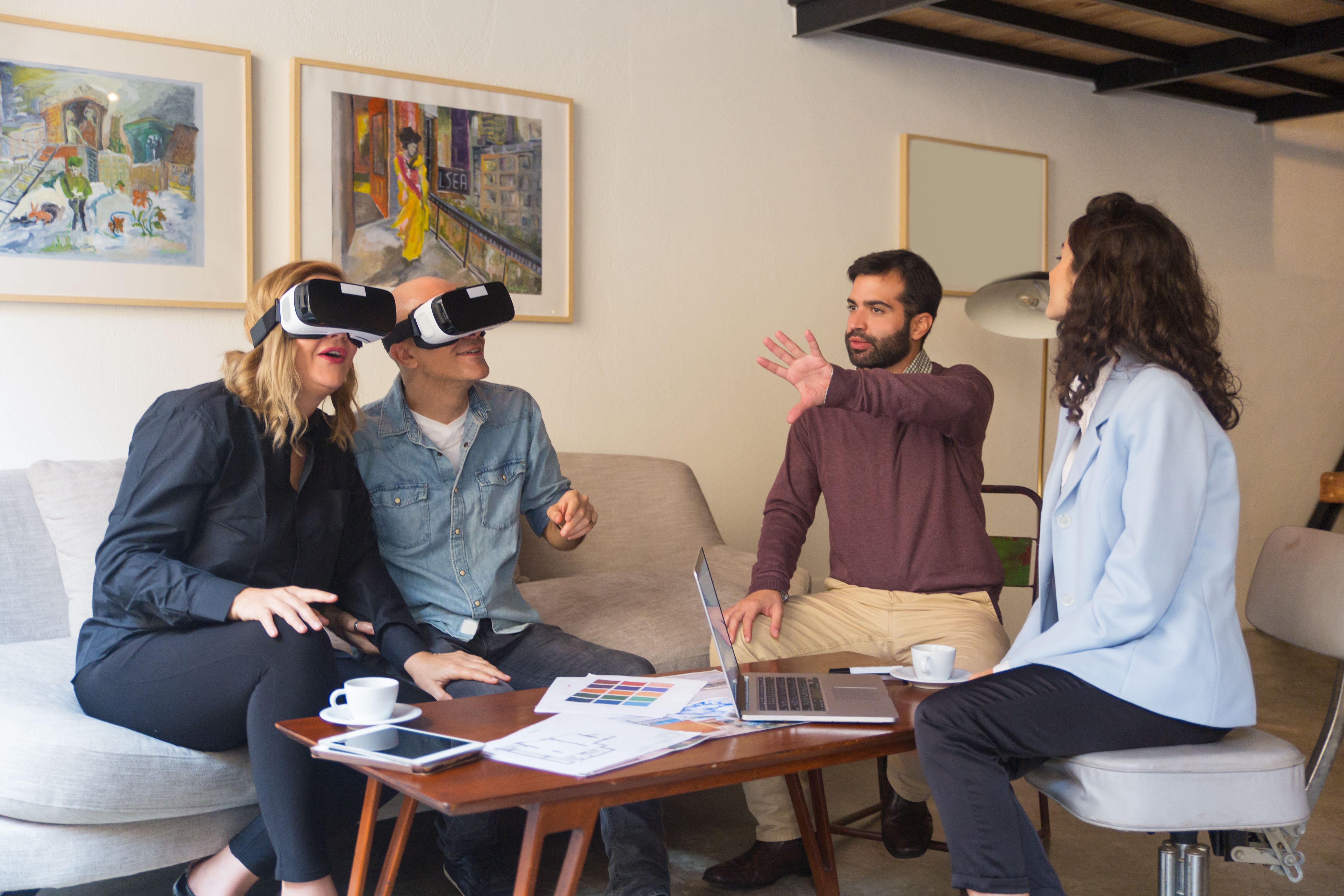
At the top of the funnel, the goal is reach and curiosity; 360° Tours and WebXR are the most efficient. In the middle of the funnel, when the buyer is already considering, AR comes in to deepen the experience without requiring an in-person visit. At the bottom of the funnel, when the customer is ready to decide, VR is the technology that eliminates the last doubts and transforms intention into a subscription. For premium closings and presentations to investors, VR combined with live experiences, or CAVE, is the way to go.
The secret is not in choosing a technology. It's in combining each one at the right moment in the journey.
Conclusion
Immersive Reality is no longer a differentiator. It's becoming the new standard.
Real estate developers who still rely on floor plans, renderings, and the buyer's imagination are competing at a disadvantage, not because the product is worse, but because the buying experience is.
The buyer has changed. They want to feel before deciding. And the technologies for this already exist, are already accessible, and are already being used by the competition.
The question is no longer "is it worth investing in immersion?" It's "how much longer can you wait to start?"