


There's a question few people ask honestly in the real estate market: The client isn't buying… or they simply didn't understand enough to decide? Because those are completely different things.
For a long time, selling off-plan was an exercise in persuasion based on interpretation. Floor plans, scale models, images, show apartments. All of this always had the same goal: helping the client picture the property in their mind.
But there's a problem here that nobody likes to admit: Most people can't do this accurately.
And it's not a lack of intelligence or interest. It's because interpreting space, proportion, lighting, and circulation isn't natural for those who don't work with it every day.
This is where sales begin to slip away silently.
No clear objection. No explicit "no." It just doesn't move forward.
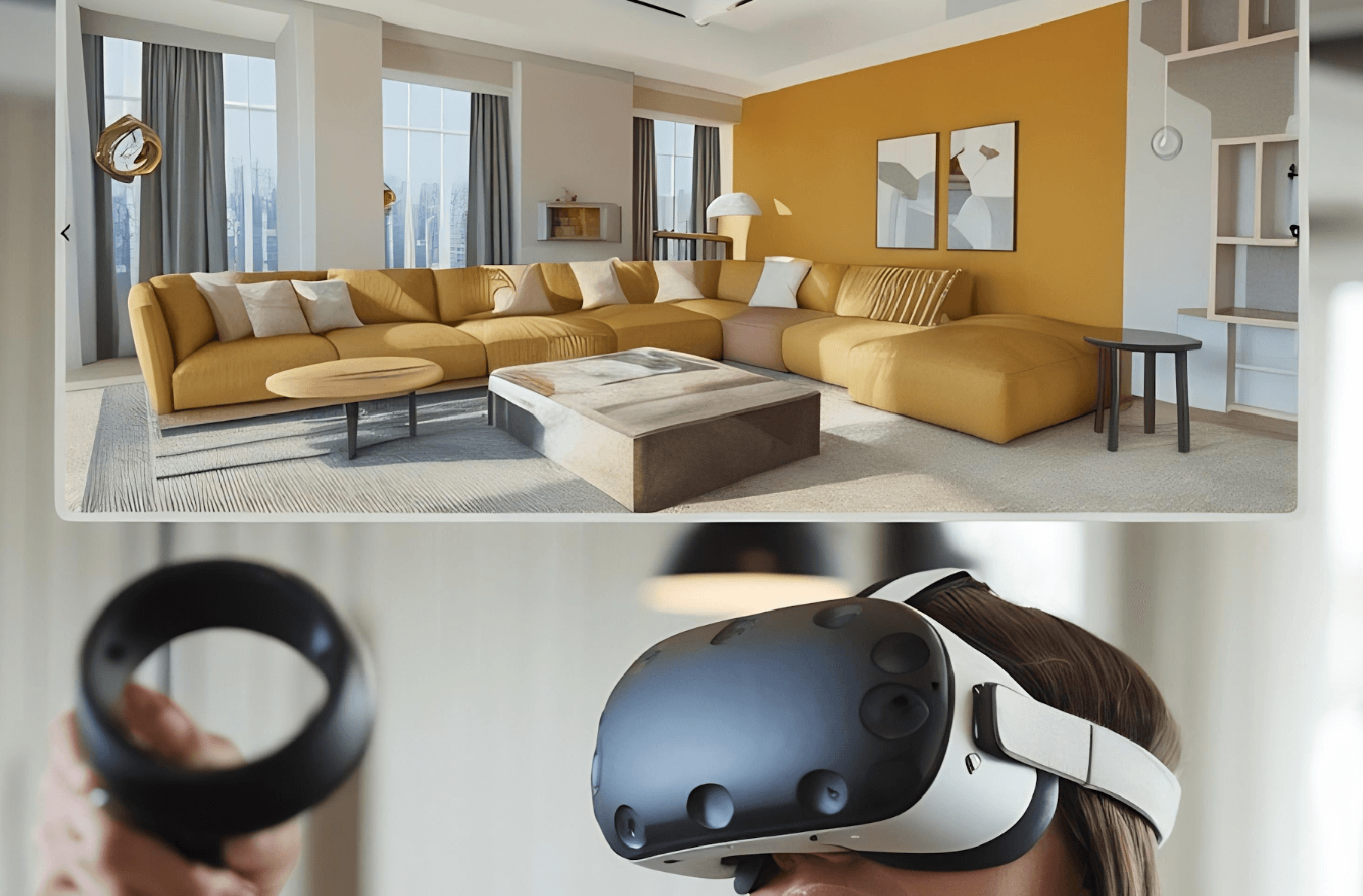
And this is exactly where virtual reality in the real estate market and augmented reality for properties come in—not as aesthetic innovation, but as a direct solution to this bottleneck. When we talk about virtual reality (VR) in practice, we're not talking about a pretty video or a clunky tour. We're talking about placing the client inside the project. They enter the units. Observe proportions. Test pathways. Perceive the light. Understand the space without needing to translate anything.
The point here isn't the technology. It's what it eliminates: the need for mental effort. And behind this seemingly simple experience, there's an extremely structured process. Everything starts with the development's materials. Technical floor plans, sections, facade, descriptive specs, finish references, lighting study, sun position, real photos of the surroundings. The more detailed this material, the more faithful the final result.
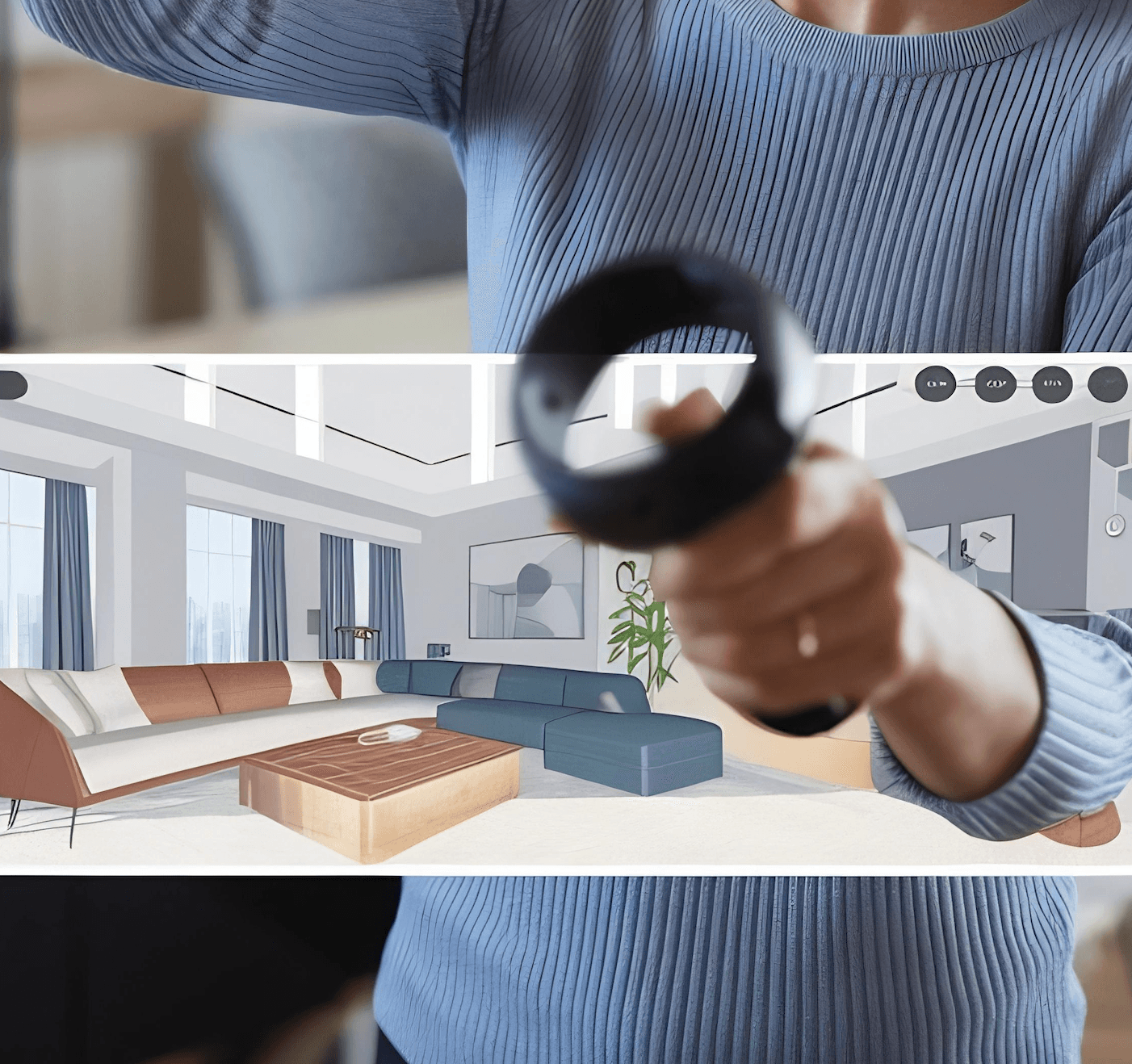
From there, the project enters the digital reconstruction phase. Every wall, every opening, every structural detail is recreated in 3D. It's not an "approximation." It's a technical reconstruction based on what will be built. Then comes a stage that separates mediocre projects from truly convincing experiences: light and materials.
This is where the environment stops feeling digital and starts making sense to the brain. Lighting follows the real position of the sun, materials respond as they would in the physical world, shadows behave as they should. This combination is what makes the client not question—they simply accept the space as real.
Next comes the interaction layer. And this is a critical point. Because having a beautiful environment isn't enough if it's passive. The client needs to move, test, explore, swap finishes, compare options, see different heights, perceive changes. That's what turns a presentation into an experience. After that, everything is packaged in an app that runs on VR headsets, even in more accessible web and mobile versions. Before delivery, there's a heavy testing phase. Fluidity, navigation, lighting, blind spots, environment behavior—everything needs to work without friction. Because any noise breaks immersion. And without immersion, there's no impact.
Now, leaving the technical side and going where it really matters:
How does this fit into the developer's daily routine?
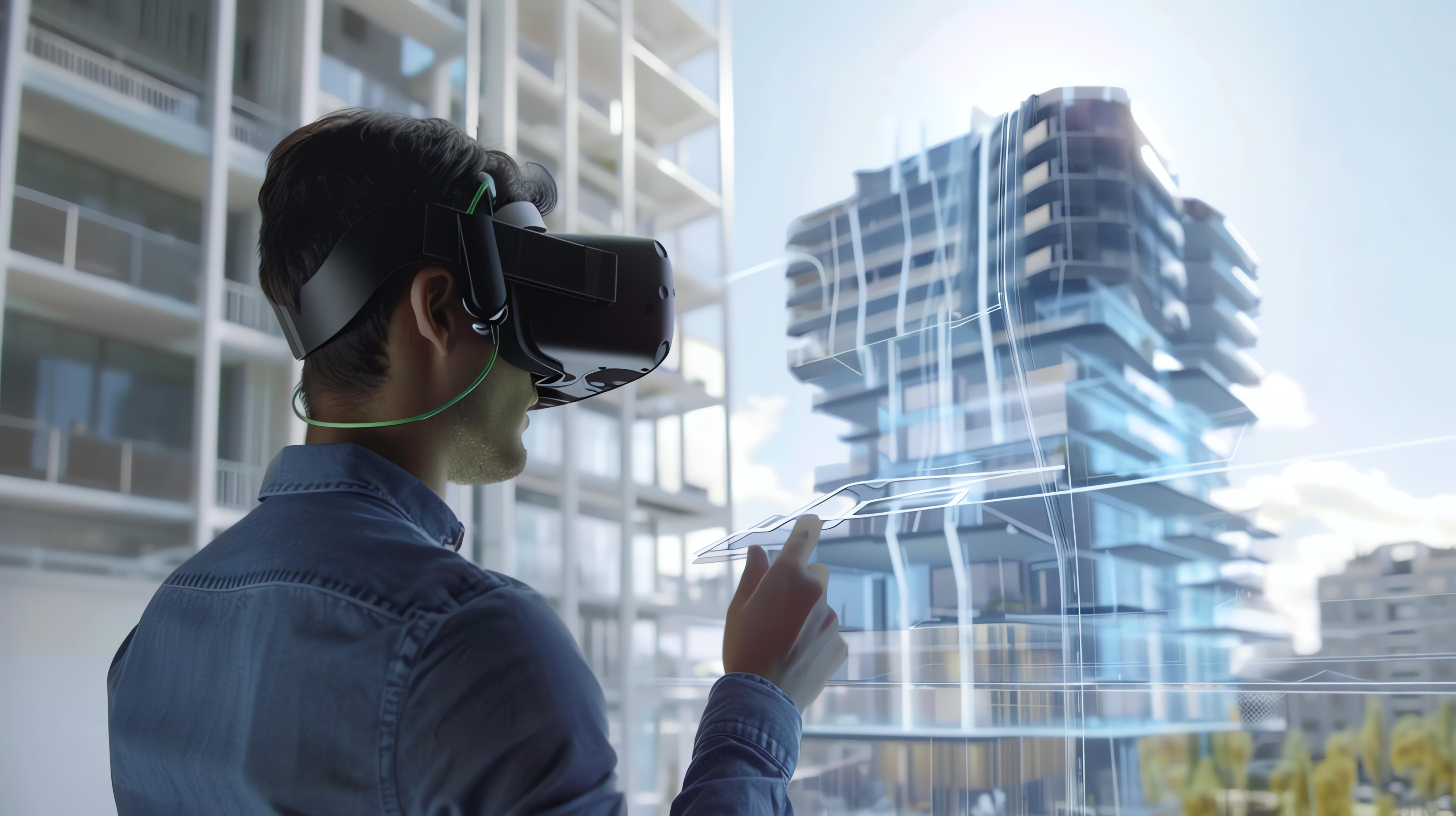
At the sales office, the dynamic changes completely. Instead of explaining, you show. Instead of leading through discourse, you lead through experience. Sales meeting time shortens and conversation quality rises. At events and trade shows, the effect is immediate. Where there's immersion, there's attention. And where there's attention, there's recall. In commercial presentations, especially with investors or out-of-town clients, VR eliminates one of the biggest barriers: distance. The project no longer depends on physical presence. And digitally, the impact expands. Immersive content, interactive tours, videos generated within the experience itself—all of this increases engagement and qualification.
But none of this matters as much as the central point: Why does this work so well?
Because it resolves the main obstacle to off-plan sales: uncertainty. The client can finally answer on their own everything that used to become doubt. And when those answers appear effortlessly, the decision stops feeling heavy.
It flows. There's also a factor many people underestimate: brand perception. When the presentation is clear, fluid, and well built, the client automatically associates that with the quality of the development. It's not rational. It's an implicit reading.
If the experience is good, the product "must be" good too. What's happening now isn't a trend.
It's a shift in standards. Just as happened with digital marketing, CRM, and online sales, immersive experience is following the same path. In more advanced markets, this is no longer a differentiator. It's expected.
In Brazil, there's still room, and that creates a huge advantage for those who move now. Because the moment the client compares two presentations, the difference doesn't need to be explained.
It's felt. In the end, all this technology, all this process, all this structure exist for one thing only: Helping the client understand what they're buying. And when they understand, they decide.
FINALLY...
The application of VR in the real estate market may seem complex behind the scenes, and indeed it is. It involves architecture, technology, design, programming, and strategy.
But the result is simple and clear!
After understanding how this works, an uncomfortable question remains: Are you still selling a project… or are you still asking the client to imagine?